 early 2011 – evaluating the effectiveness of a study in which patients participated remotely, without ever having to visit a study site. How would the results of the REMOTE study compare with those of a similar, completed, conventional study? Would this innovative research approach be validated?
Wednesday, June 11, 2014
Results of First Ever REMOTE Clinical Trial
In the clinical research industry, we’re always evaluating things. We evaluate drugs and biologics. We evaluate medical devices. We also evaluate research techniques. Yes, we try trials. We study studies. That’s what Pfizer was doing when it launched its REMOTE pilot trial in 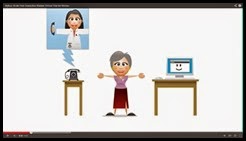 early 2011 – evaluating the effectiveness of a study in which patients participated remotely, without ever having to visit a study site. How would the results of the REMOTE study compare with those of a similar, completed, conventional study? Would this innovative research approach be validated?
early 2011 – evaluating the effectiveness of a study in which patients participated remotely, without ever having to visit a study site. How would the results of the REMOTE study compare with those of a similar, completed, conventional study? Would this innovative research approach be validated?

Thursday, May 1, 2014
A Curated Collection of Tweets from ACRP 2014
Some Polaris staff members attended ACRP last month in San Antonio. It was a great conference. See what we and other attendees had to say about a few key sessions here.
(This Twitter compilation was extremely easy to curate and annotate using a free service called Storify. You don’t even need to have a Twitter account to do it. In fact, you don’t even need a Twitter account to follow a conference hashtag. Feel free to contact us via our website if you’d like to learn how; we'd be glad to share!)
(This Twitter compilation was extremely easy to curate and annotate using a free service called Storify. You don’t even need to have a Twitter account to do it. In fact, you don’t even need a Twitter account to follow a conference hashtag. Feel free to contact us via our website if you’d like to learn how; we'd be glad to share!)
Monday, April 7, 2014
Questions All Auditors Should Ask: the Use and Misuse of Audit Checklists
 There’s nothing wrong with using a good checklist, as long as you remember that there will always be something wrong with your checklist. It is simply not possible to develop a checklist that will get to the core of every problem, that will cover every scenario, or that will ever be any reasonable substitute for that all important question: "Why?" How can you develop the best checklists possible and avoid relying on them too heavily?
Sunday, March 2, 2014
On the Quality of Vendor/Supplier Audit Responses
The Compliance Perspectives post this month was written by guest blogger, John Janeri, an independent contractor working with Polaris.
After writing, revising, and signing the finalized audit report, most independent auditors move on to their next project. I’ve done many of these solo audits, and I’ll admit that I've often wondered who at the Sponsor* company would communicate the findings to the Auditee and review their responses. But no matter, I've completed the contracted assignment and I'm now off doing something else, right? Not so much anymore.
After writing, revising, and signing the finalized audit report, most independent auditors move on to their next project. I’ve done many of these solo audits, and I’ll admit that I've often wondered who at the Sponsor* company would communicate the findings to the Auditee and review their responses. But no matter, I've completed the contracted assignment and I'm now off doing something else, right? Not so much anymore.
Thursday, January 30, 2014
Summary of TransCelerate’s Update to its Risk-based Monitoring Position Paper
The 7-page document provides an update on TransCelerate’s Risk-based Monitoring (RBM) initiative. It includes a list of lessons learned, shares FDA feedback on RBM pilot studies, and provides links to RBM training developed by TransCelerate (TCB) member companies. It also outlines 2014 publishing plans.
Monday, January 27, 2014
The Plain Writing Act of 2010: Lessons for Industry
FDA and other federal agencies are bound by the Plain Writing Act of 2010 to use “clear government communication that the public can understand and use.” It seems ridiculous that we’d need legislation for such a thing, since “understandable” and “useful” are such obvious and fundamental attributes of communication. There’s even a companion document, the 118-page Federal Plain Language Guidelines (FPLG).
Be us not, in industry, too smug.
Be us not, in industry, too smug.
Sunday, December 15, 2013
Strategic Partnerships in Big Pharma: Implications for Small and Mid-sized Sponsors
Traditionally, large biopharmaceutical companies have outsourced clinical study responsibilities to a wide variety of external vendors, distributing the work across many service providers. For their part, large CROs have routinely provided services to both large and small biopharmaceutical companies to keep their top-notch resources utilized to capacity and add to their bottom line.
Over the past several years, large sponsors and CROs have been trading in these transactional, fee-for-service business relationships for longer-term, tightly-integrated strategic partnerships. And the trend is only accelerating.
Over the past several years, large sponsors and CROs have been trading in these transactional, fee-for-service business relationships for longer-term, tightly-integrated strategic partnerships. And the trend is only accelerating.
Subscribe to:
Posts (Atom)